
June Newsletter
On margins and peripheries

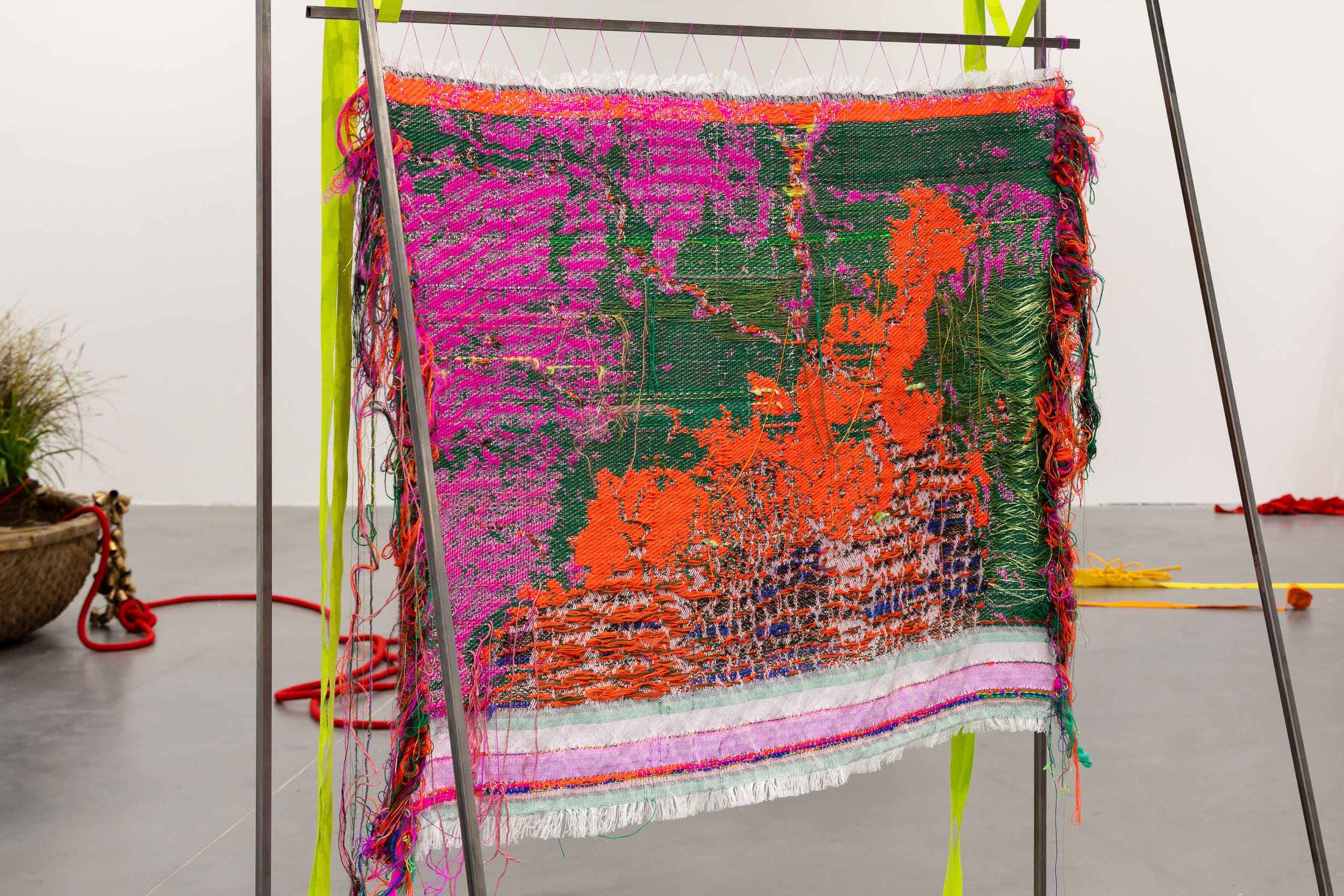
Sometimes, as I adapt to my new, freelance life beyond the art institutions in which I spent the first ten years of my career, I feel overwhelmed by the sheer volume and range of creative practice in the UK. There is so much happening, in so many different spaces, in so many different ways. How does it cohere, and what connects us, if anything? And do I have a place within it all? I increasingly find myself outside of the centre; sometimes wilfully, but often not.
As editor for the East Midlands at Corridor8 this sometimes feels like a useful position to hold. Our region is geographically broad, taking in city, coast, and rural isolation. Often, coverage of art in the East Midlands focuses on the main urban centres. Nottingham in particular, but also Leicester, Derby, Lincoln. Yet, dig a bit deeper and you will find threads of art and creativity woven across the whole region.
In the historic market town of Newark, Coreset is a relatively new and evolving creative community with a varied programme of exhibitions, community-led workshops and events that come from an ethos of fostering ‘a more interesting, equitable and sustainable world’.
A little further up the A1 is The Harley Gallery, set amongst the green and pleasant land of The Welbeck Estate in North Nottinghamshire. Founded by the Duchess of Portland in 1978 to ‘encourage creativity in all of us’, their current programme includes an exhibition of new and previously unseen ceramic works by Serena Korda.
Level Centre, nestled in the Peak District town of Matlock is a contemporary art centre that prioritises working with disabled creatives in visual and performing arts. Their programme of exhibitions is driven by a desire to ‘celebrate the art that difference makes’, as well as offering vital opportunities for artists to develop and test new ideas.
Just a few miles down the road (or an adventurous hike across the hills and past the Nine Ladies stone circle) is Haarlem Artspace in Wirksworth, who champion rural contemporary art through their changing programme of exhibitions, micro-residencies and workshops that respond to the distinctive geography and folklore of their unique location.
Fermynwoods Contemporary Art down in Northamptonshire is a commissioning powerhouse, presenting new works by contemporary artists in places across Northamptonshire and online, with a focus on reaching non-traditional arts audiences, rural and disadvantaged communities. Corridor8 has covered many of their projects already, including Tobias Zehntner: Halo at All Saints Church in Earls Barton, Maya Chowdhry and Alison Clare: What’s Eating Our Reality at The Core, Corby Cube and an online presentation of David John Scarborough’s digital installation Earth-Stepper.
The Generator is a new home for ‘creativity, connection and community’, a community-led venue that provides much needed space for creatives and collectives in Loughborough. Their inaugural exhibition last month ‘Our Very Fabric’ explored forms of making that responded to the history of the building as a former art school and the long history of textile making in the region.
Last but certainly not least, The Hub in Sleaford, home to the National Centre for Craft and Design, hosts a programme of changing exhibitions that foregrounds artists and makers working at the intersection of contemporary art and craft. Their current exhibition ‘Raisa Kabir: I only dance, I wish we could sing’ was reviewed for Corridor8 by Ruth Charnock. Kabir is an interdisciplinary artist and weaver whose work explores the material histories and textile networks that connect Asia and Europe, with a generous helping of defiant joy and queer sensibility holding it all together.
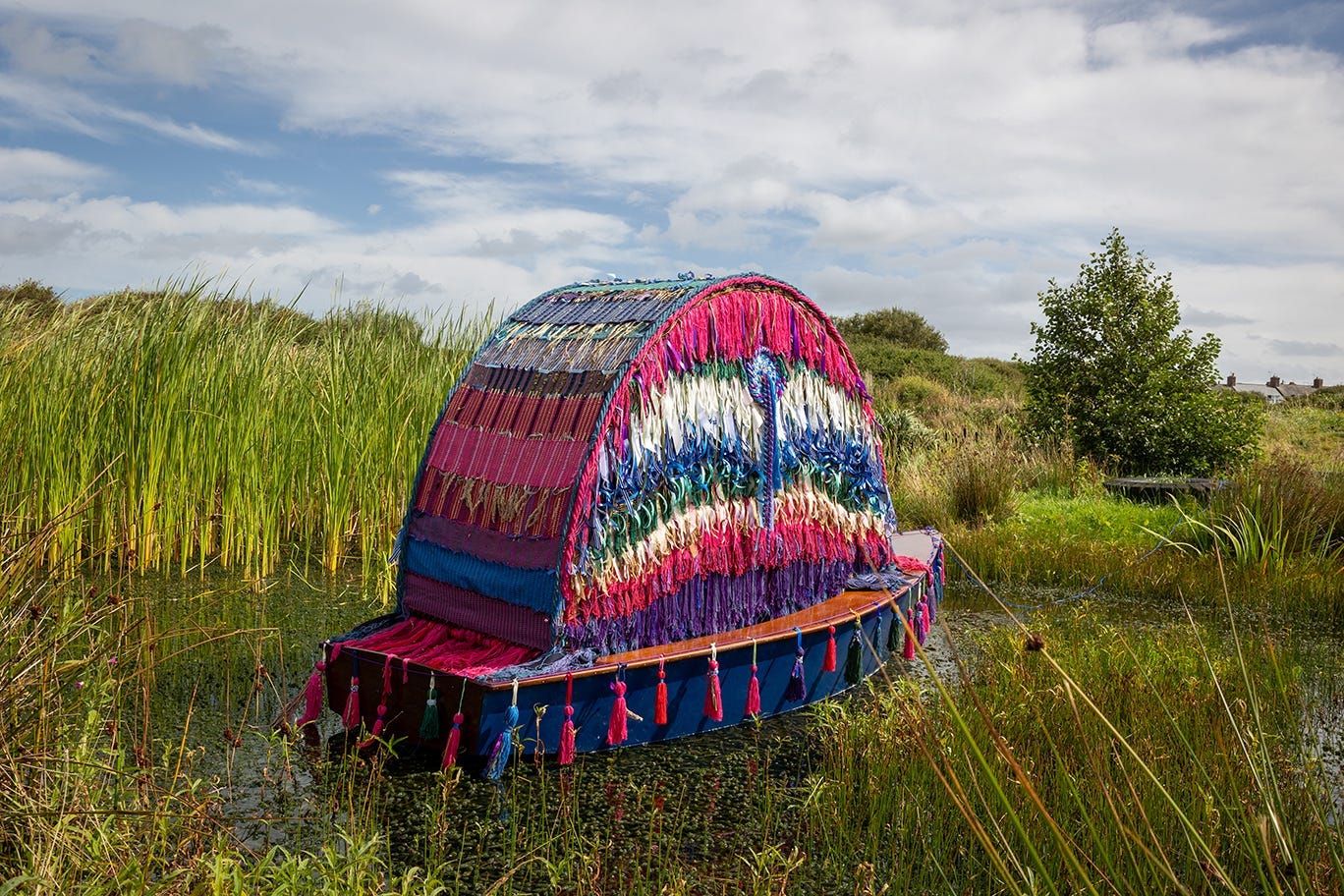
In our latest Substack long-read, Jenny Steele mulls on the slow development of her own obsession with weaving, which began in the midst of the pandemic. Initially a response to a challenging series of life events, Steele reflects that it also signalled a pivotal shift in her practice that she describes as having become ‘frustratingly formulaic’. For Steele, developing a supportive network of other artists who weave has been an important part of this practice. Of Raisa Kabir’s work, Steele writes:
What I appreciate about Raisa’s work is how she uses the performance of weaving to identify hidden aspects of the weaving process. As she described in an email to me, she wishes ‘to activate the latent political and violent histories that are ascribed into the histories of cultivating that material – the extraction of the land, the labour of the people who grew, processed, or spun and wove with that material, dye, fibre’.
Steele’s piece, along with many other explorative, personal and experimental texts, is available in full to paying subscribers. Please consider a paid subscription and help us to continue to pay writers for their work here, outside of the supported content model we run on the main site.
Round up of our reviews, features and interviews:
What else has been happening across the North and Midlands? Here’s a roundup of the exhibitions and artists we’ve encountered over the last few weeks:
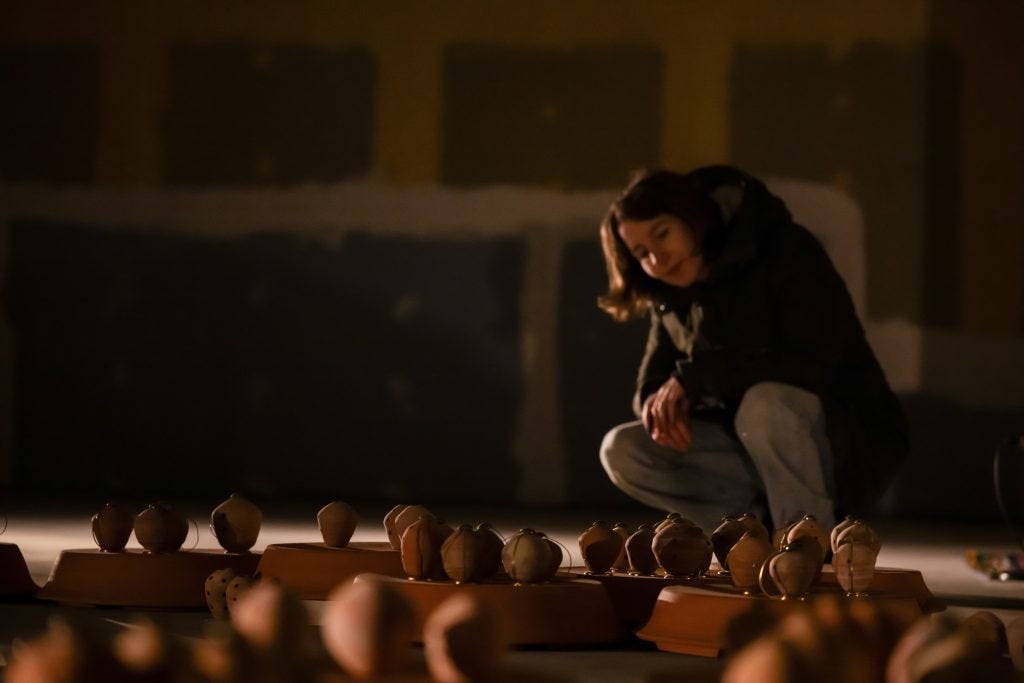
Jessica El Mal introduces us to an installation comprising 200 clay wind instruments from Pakistan in Invisible Flock: Microtonal at Lancaster Arts.
Caroline Bagenal reviewed Felicity Hammond: Reactor at Signal Film & Media, Barrow-in-Furness.
Bob Dickinson considers the role of emotion and intuition within artistic practice in Felt not Thought… Works on Paper at Cross Lane Projects in Kendal.
Denise Courcoux reviewed a trio of Women in Print Exhibitions at Allan Bank, a National Trust property in Grasmere.
Liliana Muñoz Flannery went to the Whitworth to see Michaela Yearwood-Dan: The Practice of Liberation.
Jazmine Linklater reviewed Curtain Up at the Lowry, an exhibition that asks visitors to step—quite literally—into the spotlight.
Mollie Balshaw spoke to Yasaman Mollasalehi about the evolution of her painting after coming to the UK from Iran in Sad Music You Can Dance To: On Yasaman Mollasalehi.
Natalie Bradbury reflected on exhibition-making that foregrounds the experience of early years audiences in Things of the Least: lively exhibition-making with children under-3 at Manchester Art Gallery.
Chantal Oakes encountered Amy Townsend-Lowcock’s performance ‘Enter, Tragic Mulatta’ at Manchester Art Gallery.
Ruth Charnock reviewed Raisa Kabir: I only dance, I wish we could sing at Hub, Sleaford.
News
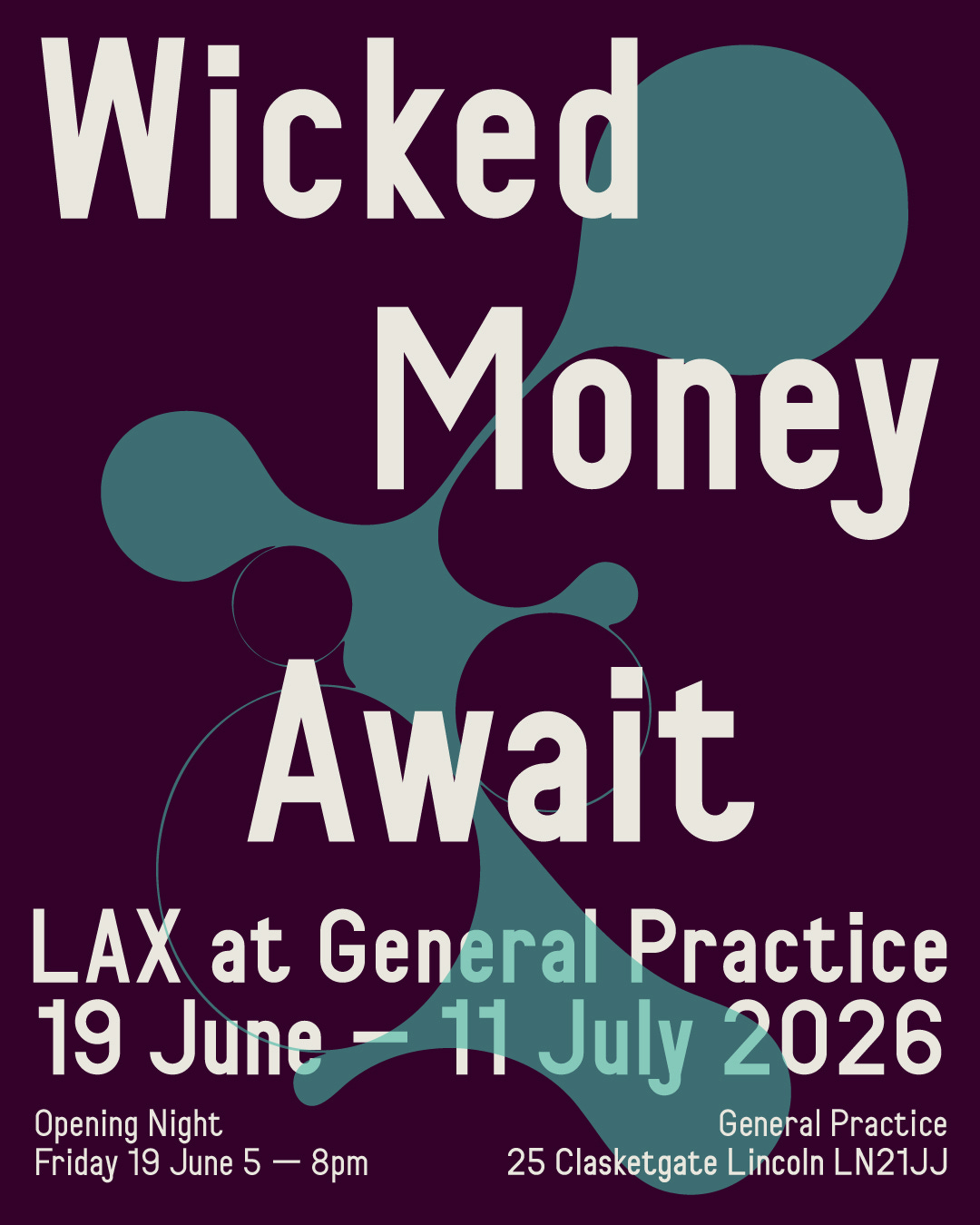
Our Yorkshire editor Benjamin Barra is organising an exhibition as part of LAX programming collective. If you’re passing through Lincoln later this month, look out for ‘Wicked Money Await’ at General Practice, 25 Clasketgate, Lincoln, LN2 1JJ.
19 June – 11 July 2026
At a time when LAX membership is split between Leeds and London, it seems like an opportune time to examine problematic notions of ‘centre’ and ‘periphery’ in an arts context, and to celebrate collectives, studios and artist-led spaces as de-centring sites of exchange.
The artists in Wicked Money Await carry with them their layered histories and experiences, their interests and expertise, and they excavate and map these through their rich and varied practices. Where people and practices meet, they affect change in one another. To acknowledge ourselves as nodes in translocal networks is to return agency to the artist, outside of the systems and markets that sometimes seem to contain us.
Opening night: Friday 19 June, 5–8pm
Other opening times: Fridays and Saturdays, 12–4pm, and by appointment
With love and solidarity from Rachel and the Corridor8 team.